Padel clubs that stay busy all year
Anyone can put courts on a field. The clubs that pay back are the ones planned around how often the courts will be played in a British winter, not how cheaply they can be built. We take padel from site appraisal to opening night, and set it up to perform after that.
What would your padel club cost?
If you would like an indicative budget for your scheme, leave your email and we will be in touch to talk through the number of courts, outdoor, covered or indoor, and how they would be installed.
We will only use your email to reply about your scheme and, if you wish, to send occasional padel insights.
Start with how often the courts will be used
Build cost is the number everyone asks for first, and the one that matters least on its own. A court that is cheap to build but empty from November to March earns less than a dearer court that is booked every evening of the year.
So we start with demand: who lives and works within a short drive, what they will pay, what else they can play nearby, and how bookings will hold up through winter, wet evenings and cancellations. The court type follows from that, not the other way round.
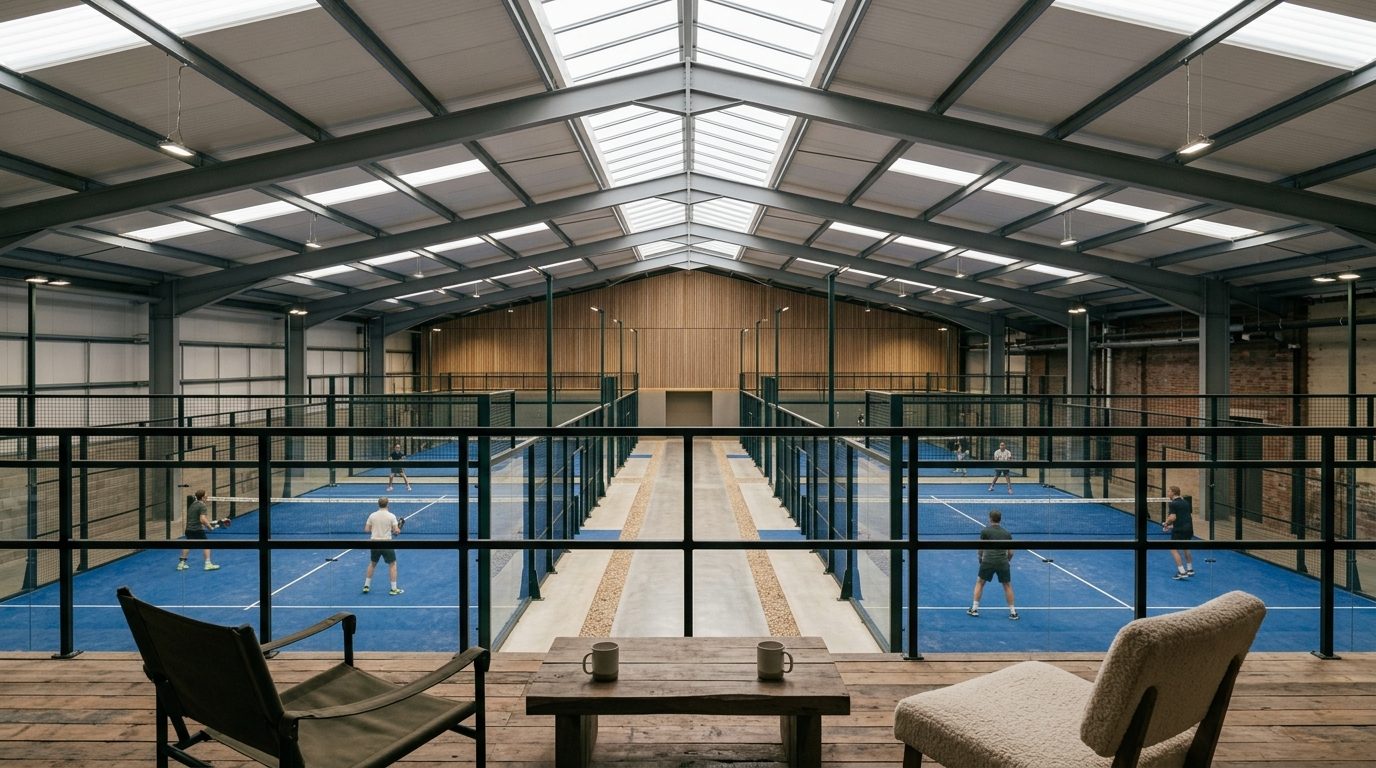
Outdoor, covered and indoor courts compared
A high-level guide. Every site is modelled on its own numbers before we recommend one.
| Outdoor | Covered | Indoor | |
|---|---|---|---|
| Capital cost | Lowest | Middle | Highest |
| Playable in a UK year | Strongly seasonal | Most of the year | All year |
| Planning route | Usually the simplest | Case by case | Most involved |
| Time to open | Quickest | Moderate | Longest |
| Pricing power | Lower, weather-dependent | Good, steadier | Highest, premium |
| Suits | Testing demand on an existing club site | Clubs wanting year-round play without a full building | High-demand urban and premium locations |
Designed for rain, wind and dark evenings
Padel came from Spain, where outdoor courts work most of the year. Here, short winter days and wet evenings decide whether a club makes money, so the design has to answer them.
Canopies that keep play going
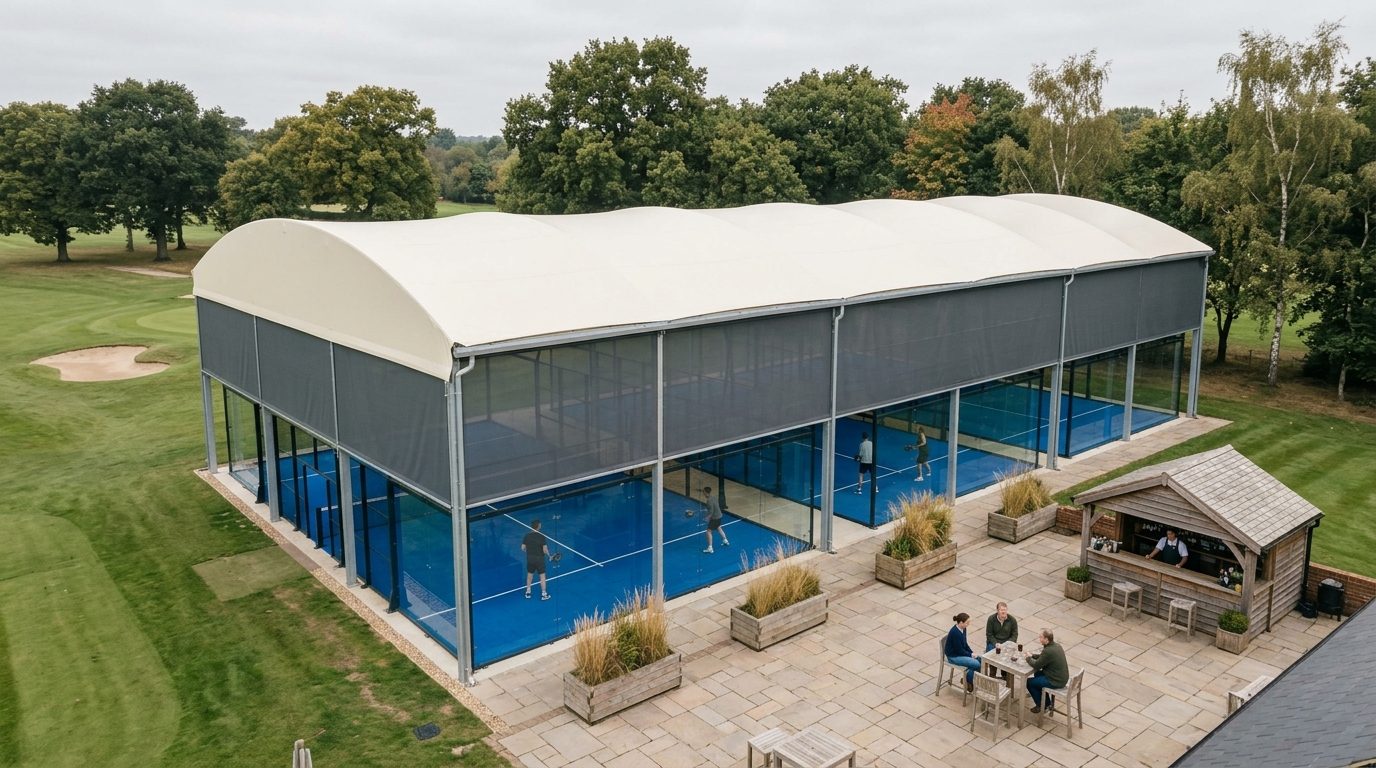
A tensile or steel canopy keeps rain off the glass and the surface, with mesh to the upper sides to cut driving rain and wind while keeping the courts open and visible.
Lighting for winter evenings
Even, glare-free court lighting for peak hours, designed to keep spill off neighbours and the night sky, which also smooths the planning route.
Drainage that clears fast
A court that holds water after a shower is a cancelled booking. Falls, sub-base and outfall are designed for heavy rain, not average rain.
A path to cover later
Where budgets are tight, we design outdoor courts with foundations and drainage ready for a canopy, so covering them later is an upgrade, not a rebuild.
What we look at before anything is designed
Demand and competition
Catchment, existing clubs nearby, local pricing and who the players will be: members, pay-and-play, coaching, schools, corporate.
Utilisation through the year
Bookings modelled month by month, peak and off-peak, including winter and weather, to see what the courts will really earn.
Planning context
Neighbours, noise, light, height, heritage, green belt and access: the issues that decide whether and how permission is granted.
Ground and services
Ground conditions, levels, drainage outfall and power supply, which can move the budget more than the courts themselves.
Access and parking
How players arrive, where they park, and how a club fits around what is already on site.
Operator and exit
Who runs it, how it is priced, and how the club is set up to be valued, refinanced or sold.
Get the ground and the permission right first
Most padel courts need planning permission, and the issues are predictable: noise, lighting, height and how a canopy sits in its setting. We test those at the start, talk to the council before applying, and prepare the noise and lighting evidence planners expect.
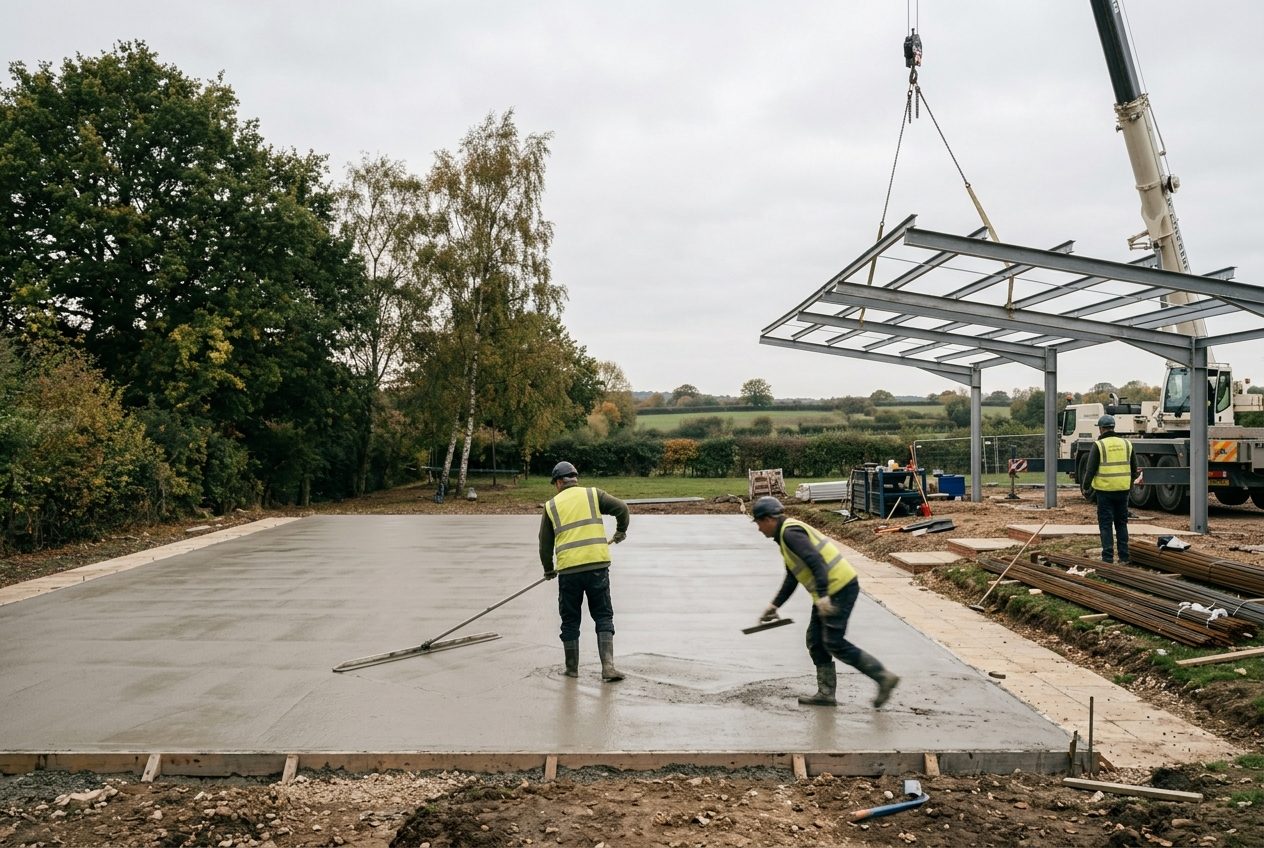
Underneath, courts need a level, well-drained base built to tight tolerances, and canopy foundations designed with the structure. That is where cost and programme risk sit, so we resolve it before the court supplier is appointed.
Ring beam, plated or platform
How a court meets the ground affects cost, programme, planning and how long it lasts. We recommend the system once we know the site, the existing surface and how permanent the club needs to be.
Ring beam
A reinforced concrete beam around the court perimeter carries the glass and steel frame, with a level, free-draining base inside it. The most robust and permanent option, and the usual choice for new clubs and canopied courts.
Best for: new-build courts, permanent clubs, sites with poor or uneven ground.
Plated system
The court frame is bolted through steel base plates onto an existing sound surface, such as a tennis court or concrete slab, with the playing surface laid over. Less groundwork, quicker and cheaper, provided the existing base is level, thick enough and drains properly.
Best for: converting tennis courts or existing hardstanding.
Platform system
A self-supporting steel platform on adjustable feet carries the whole court, with no fixings into the ground. It can sit on uneven ground, a roof or an indoor floor that cannot be drilled, and can be moved later.
Best for: leased or temporary sites, indoor buildings, rooftops and phased schemes.
We buy courts direct and manage procurement for you
We work directly with court manufacturers and with UK distributors, and manage procurement on your behalf, so you get the right court at a fair price without having to become an expert in glass, steel and turf.
Specification
Glass, frame, turf, lighting and canopy specified for your use, from club play to competition standard.
Like-for-like pricing
Quotes from manufacturers and distributors compared on the same basis, so the cheapest price is also the right one.
Lead times and delivery
Orders, shipping and site delivery timed to the groundworks, so courts arrive when the base is ready.
Warranty and aftercare
Accredited installers, warranties held in your name, and maintenance set up before handover.
Plan the clubhouse with the courts, not after them
Food and drink, coaching, leagues, memberships, events and somewhere to sit after a game are what turn a booking into a habit, and they carry a large share of a club's income. We plan the clubhouse, changing and social space with the courts, not after them.
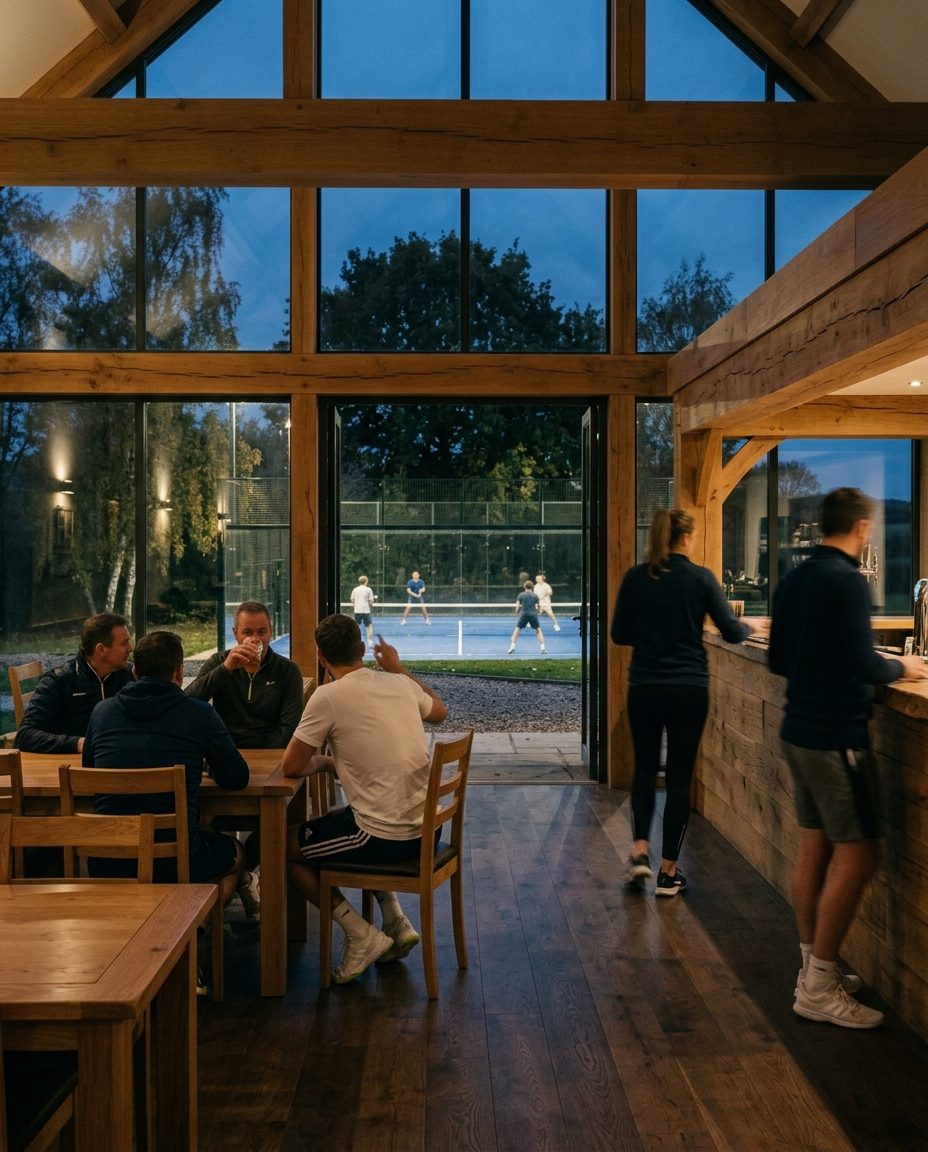
What keeps a club busy once the novelty wears off
As more courts open, players will have choice, and a court alone will not keep them. The clubs that hold their bookings are the ones that give people a reason to come back, so we plan for these from the start, not after the first quiet winter.
Coaching
A resident coach and a clear pathway, from first lesson to competitive play, turns occasional players into regulars and fills off-peak hours with clinics and juniors.
Community
Members who know each other stay. Social nights, mix-ins and a welcoming clubhouse matter as much as the courts themselves.
Events and leagues
Weekly leagues, ladders, tournaments and corporate days give players fixtures to keep, and bring new people through the door.
Maintenance
Clean glass, a well-brushed surface, working lights and a dry court after rain. Standards slipping is the quickest way to lose players to the club down the road.
Quality installation
Courts, canopies and lighting built to last, on a properly prepared base, so the club still looks and plays well in year ten, not just on opening night.
A booking experience that works
Simple online booking, fair pricing and a quick response when something goes wrong. Small things decide whether players rebook.
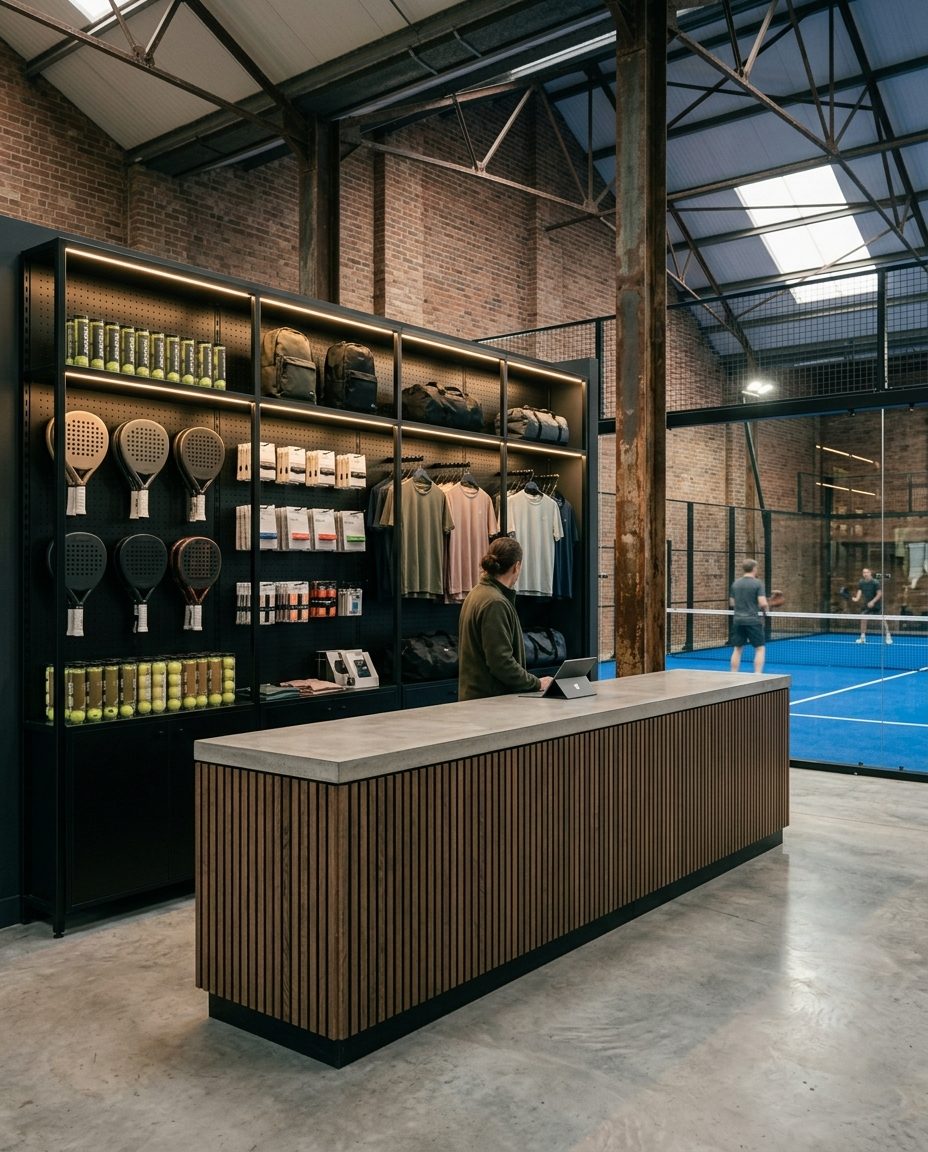
The first thing players see, and a second till
A well-run reception sets the standard for the whole club. With a curated wall of rackets, balls, grips, bags and kit, plus racket hire and demo days, it also earns: small, frequent sales that add up across a busy week and give coaches something to recommend.
Working with us on padel
Develop
For landowners and clubs with space: we appraise the site, secure planning and funding, and deliver the club for you or with a partner.
Build
For operators with a scheme: we manage design, groundworks, court procurement direct from manufacturers, canopy and clubhouse to a fixed budget and programme.
Run
For owners who want it run well: operator appointment, booking, pricing and membership set up, then the first season measured.
What clubs and landowners ask us first
Do padel courts need planning permission?
In most cases, yes. The glazed walls and fencing exceed permitted heights, and floodlighting, noise and the look of a canopy are what planners and neighbours focus on. We test the site against those early, and prepare noise, lighting and design evidence before an application rather than after an objection.
Indoor, outdoor or covered: which is best?
There is no single answer. It depends on local demand, what players will pay, the site and the budget. In the UK climate, covered courts are often the strongest balance of cost and year-round play, but we model each option for your site before recommending one.
How long does it take to build a padel club?
Planning usually sets the pace more than construction. Courts and a canopy on prepared ground are relatively quick to install; a new clubhouse or a full building takes longer. We set out a realistic programme at feasibility stage.
Can padel be added to a golf, tennis or sports club?
Yes, and existing clubs are often the best places for it: members, parking, a bar and a car park already exist. The work is fitting courts in without harming what is already there, and making the clubhouse work harder for the new players. Read our guide to padel at golf clubs.
Can you help with funding?
We prepare the appraisal, business plan and lender pack, and can introduce operators and funders. Whether you fund it yourself, borrow, or bring in a partner, the numbers are built to stand up to a bank's scrutiny.